Startup Forum
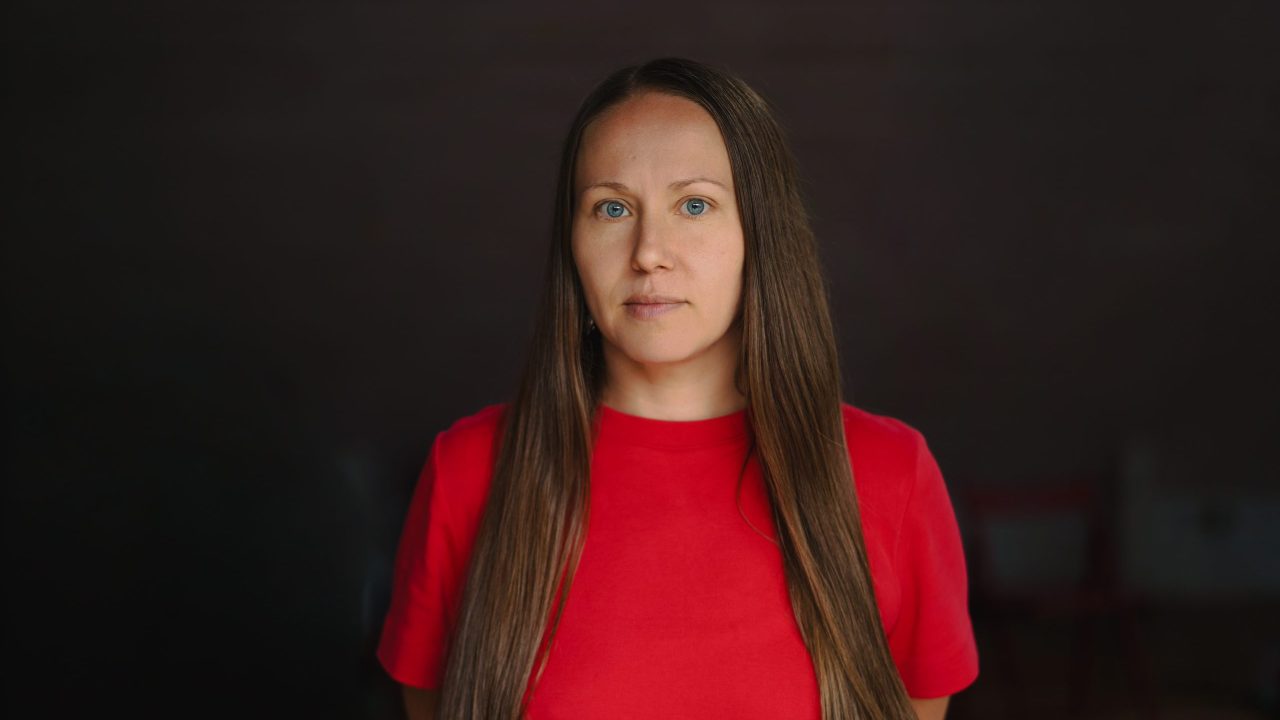
A Space for Grief: An Interview with Mariia Kondratieva
Read | 17 July 2026The fourth edition of Startup Forum took place at Spring Forward in Gorizia (23–26 April 2025). Vár Bech Árting, Mariia Kondratieva and Joaquín Collado were awarded €10K each to realise the projects they proposed.
In this space we publish interviews about their curatorial and production journeys.
In this interview by Zala Julija Kavčič, Mariia Kondratieva talks about the motives behind and the journey towards realising her project embedding a performance that deals with death, grief, and ultimately life, to her fellow Ukrainians, for whom these questions have been, since the invasion of their country in 2022, very close to heart and home.
Featured picture © Myron Sakhryn
Interview by Zala Julija Kavčič
Every morning at 9am, life across Ukraine stands still for a minute: in train stations, on busy streets and in quiet homes, people stop to honour those lost in the war. Dancer, choreographer and emerging curator Mariia Kondratieva perceives this collective pause as a kind of “choreography of stillness” that binds a wounded nation together. With a desire to create a space for reflection and grieving, this past May, Kondratieva brought Solène Weinachter’s After All to the first One Piece Festival – a format that centres on a single performance, supported by related events that allow the audience to reflect deeply on one core theme. Originally envisioned for Lviv, Ukraine, the project eventually found its home in Kraków, Poland, serving a community of Ukrainians living abroad.
PART I: LOOKING FORWARD
To begin, could you introduce yourself and the journey that brought you to this project?
I am an emerging curator and culture manager, but I am first of all a dancer, performer and choreographer. I co-organised festivals in my native town of Dnipro, and ran a contemporary dance school there. I found my way to Aerowaves’ Startup Forum through a colleague who invited me to be a candidate. I didn’t realise at first that Spring Forward was not an ordinary festival, but something special; once I was there, I found a great network of specialists, and it became an incredible opening into international collaboration.
How did the One Piece Festival first begin to take shape in your mind?
After returning home to Ukraine from the Forum, I started to think about what I could actually do, because there is war in my country and it is not so easy to imagine an international festival in this context.
I wanted to bring something that could be important and could become a frame for reflection for the audience and the artists. One of the Forum mentors, Frosso Trousa, told me to choose from my heart. I really liked Solène’s work, and I could see how therapeutically it worked for me personally. On one hand, it is really risky to open this theme for Ukrainians because it is so painful. But I felt it could be a therapy through art, so I started to build a project around it. I decided it should be a small festival to hold, open, and share the space. Just one piece and a few events around it.
What was it about Solène Weinachter’s After All that you felt was vital to bring to your audience?
Solène is a beautiful dancer and actor, and her piece uses multidisciplinary approaches like theatre, dance and even stand-up comedy to talk about death. When I first saw it, I was sitting with an audience who were seeing it from a different perspective. I thought: “You are joking about death, and it’s not so funny for me right now,” but in the end, I started to cry. It is not a performance about death at all; it is a performance about the importance of life.
The project moved from Lviv to Kraków. How has that shift shaped the project? How has it felt for you to carry out this process in such precarious times?
It was quite a crazy experience for me. Originally, the stage and hotels were booked for November 2025 in Lviv, but after negotiations it became clear the team was not ready to travel into Ukraine. It was a shock for me, but I was determined to deliver this project to Ukrainians. I made a trip in January and found nice partners in Kraków who organise a festival of Ukrainian theatre there, and it felt like every part of the project could find a destination there.
As Ukrainians, we somehow already have this experience of how to live in this situation and still be able to work, even with terrible things happening around you. I just continue, as a lot of culture managers in Ukraine do. Some nights are terrible, but you breathe in, breathe out, and continue.
There is an evocative photograph of hands in the grass connected to your project proposal. What is the story behind it?
The image features the hands of my teacher and colleague, Maryna Lymar. She was a pioneer of contemporary dance in Ukraine and she passed away unexpectedly due to cancer. It was a shock for the dance community, and because of the war, we still haven’t been able to do anything to honour her. When I was searching for pictures to present my project, I understood that this project is also my responsibility to continue the work she started in Dnipro. This festival is, in many ways, also a tribute to her.
(continue scrolling for part II)
PART II: LOOKING BACK
Now that the festival has concluded in Kraków, can you walk me through those three days?
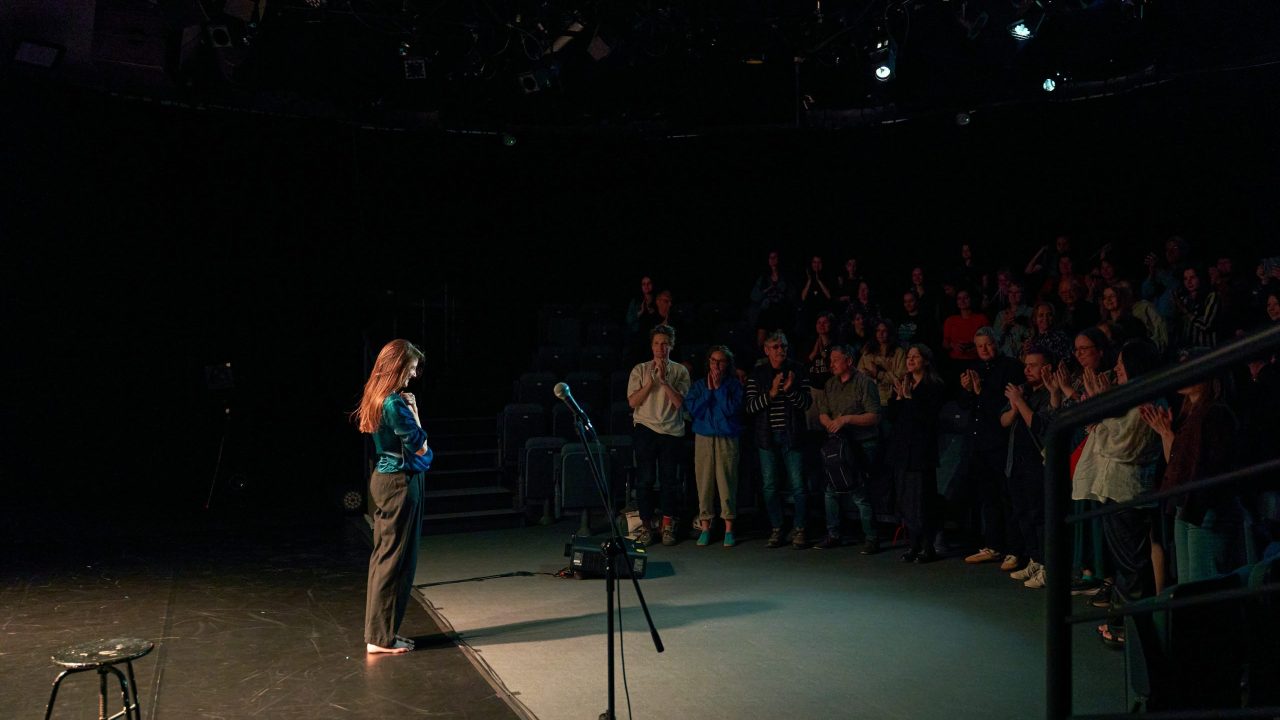
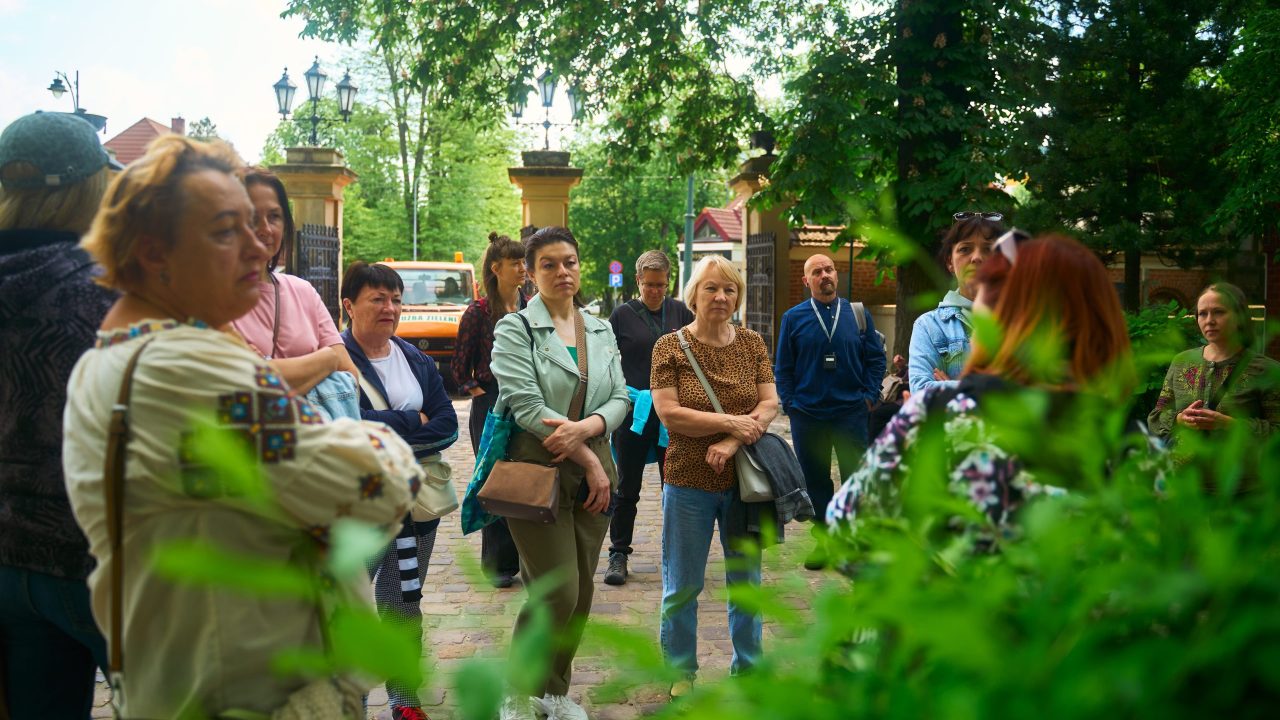
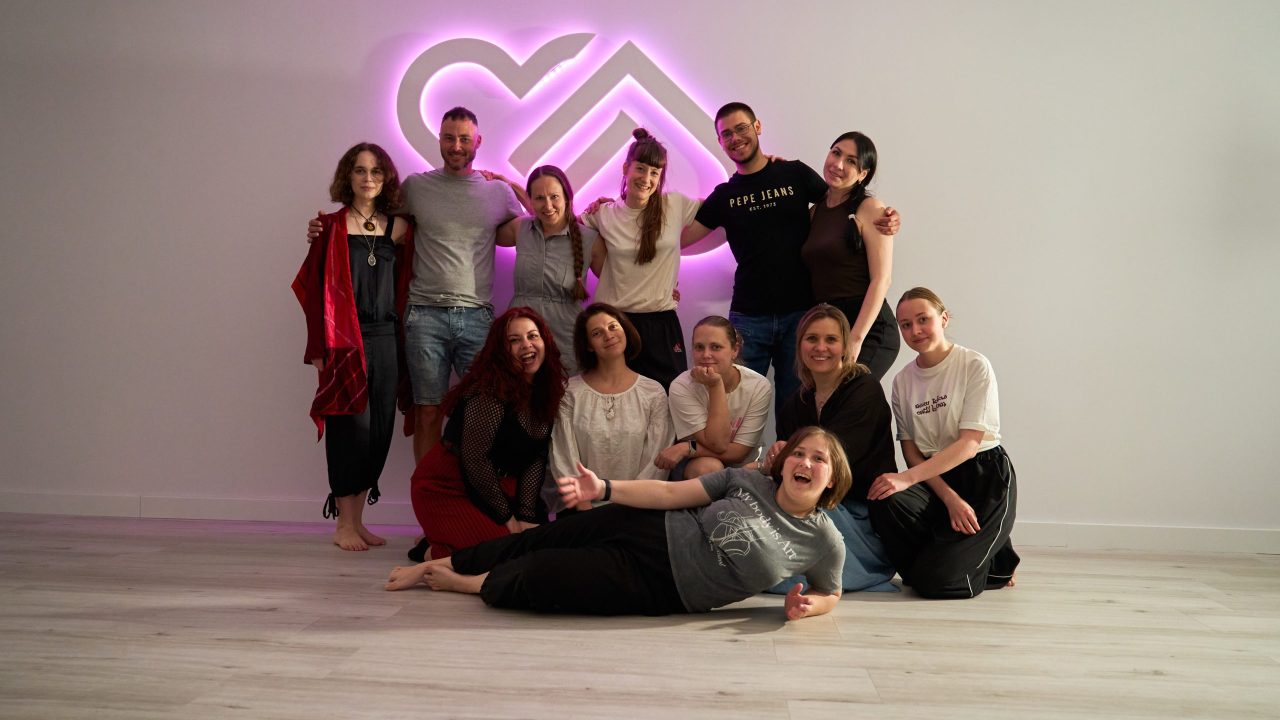
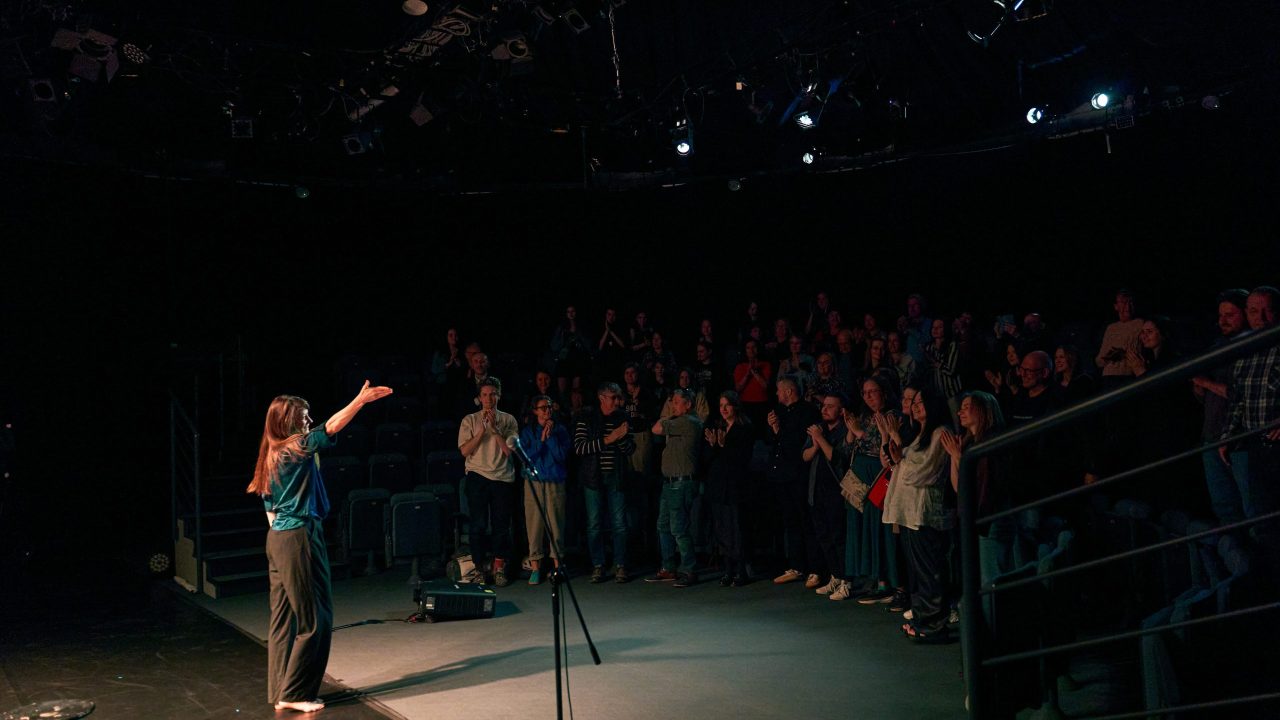
It was a really cool and intense experience. On the first day, 20 May, we had the main event: the performance of After All at 7pm, followed by an after-talk. The second day began with a morning excursion to the Rakowice Cemetery, which is like an open-air museum in Kraków. That evening, Solène gave a workshop for students and professionals built on the relationship between dance and acting, the tools she uses in her own performance. Finally, on the last morning, we held the Death Café, a round-table discussion where people talked about the theme. It was interesting to see how even in this small frame of four events, the festival established a welcoming space.
The cemetery tour seemed like a central part of that reflection. How did it feel in practice?
It was my proposal to do this tour, and I found a professional guide who was really inspired by the concept. She was a local from Kraków, but she had a personal story: her father is Ukrainian and her mother is Polish. So she herself represents a connection between the two cultures. I asked her to find accents on the history of Ukrainians buried there. The history between Poland and Ukraine is not always clear on a political level, but on the ground at the cemetery we saw how the people of Kraków feel this connection too, and it was really special.
Did you feel that the space for reflection and grief you hoped for actually emerged?
Yes, and the main surprise for me was seeing how the festival “opened up” in the process. I was worried about the audience because I don’t live in Kraków and didn’t know the context. Some people were not sure they wanted to come to the Death Café initially because the topic seems unusual, and can even be uncomfortable, especially for Ukrainians. But after being inspired by the piece and the after-talk, a number of audience members registered for the Café. They were ready to go deeper, to think more, and to communicate. It proved my idea that focusing on one piece creates a “thematic cloud” where the audience can live within one core theme for longer, rather than just visiting it.
By the time we reached the Death Café, the atmosphere was surprisingly calm and profound. It worked as a kind of “group container” where we all supported each other. We were prepared to have a three-language event with Ukrainian, English and Polish, but in the end it was almost 100% Ukrainians who were living in Poland or just visiting. It was a group of people who didn’t even really need the “container” because they were already there – people who were willing to discuss very deep stories and incredible scenes from their lives. It felt almost like a family.
You mentioned that the audience was almost entirely Ukrainian. How did that frame the performance?
It was a very special atmosphere. You have to be really aware and sure that you are ready to dive deeper while the war is still going on. Solène told me afterwards that she felt she was in a needed place with this work, that it was not just one of many performances but something the community truly required. A woman in the audience told us that the piece worked like therapy for her, like the beginning of reflection that stays in the body.
The “minute of honour” was an important part of your concept. How did it manifest in Kraków?
When I returned to Lviv after the festival, I happened to be near the train station at 9am, and saw the minute of honour, every person staying still. It looks like choreography. I call it a “choreography of stillness”. We did this minute of silence at the cemetery and before the performance in Kraków. It is an important way to be present, to stay in the moment and honoir the people who have passed away in the war and those who protect us. It brings a symbol and an energy into the air that connects us to home, even when we are in Kraków.
Now that the project has concluded, how do you feel about the journey and the outcome?
In general, I am satisfied. I was worried at the beginning, honestly, as it was a risky idea to change the location, the partners and the community. For me, as an experience, it was a lot: the first real project I created myself, realising it from the initial idea and through all the changes to the final outcome. I was the main person taking responsibility for everything, and it was a hard journey. Now, I can look back at the “invisible parts” of the organisation and see where some steps could have been done more effectively.
In these processes, you never really know. There is always a percentage of uncertainty, you never know what will happen that day or how people will react. But I have learned it is okay to stay in this risk, because it works. The real result is not a physical one you can count or write in a report; it is something deeper in people’s souls. This therapy through art is a process that stays in the body even years after. I feel a deep gratitude in my heart to Aerowaves for choosing this project and supporting us even knowing my country was at war. And I am personally happy to have found these new connections and to see what the project has become.
The One Piece Festival took place from 20–22 May 2026 in Krakow, Poland.