Startup Forum
Festival Paisaje: a social and poetic landscape – An interview with Joaquín Collado
Read | 31 July 2026The fourth edition of Startup Forum took place at Spring Forward in Gorizia (23–26 April 2025). Vár Bech Árting, Mariia Kondratieva and Joaquín Collado were awarded €10K each to realise the projects they proposed.
In this space, we publish interviews about their curatorial and production journeys.
In this interview by Nicola Mitropoulou, Joaquín Collado talks about Festival Paisaje in his home village in rural Spain, and about how the festival has helped him to remember why we make art: to create relationships.
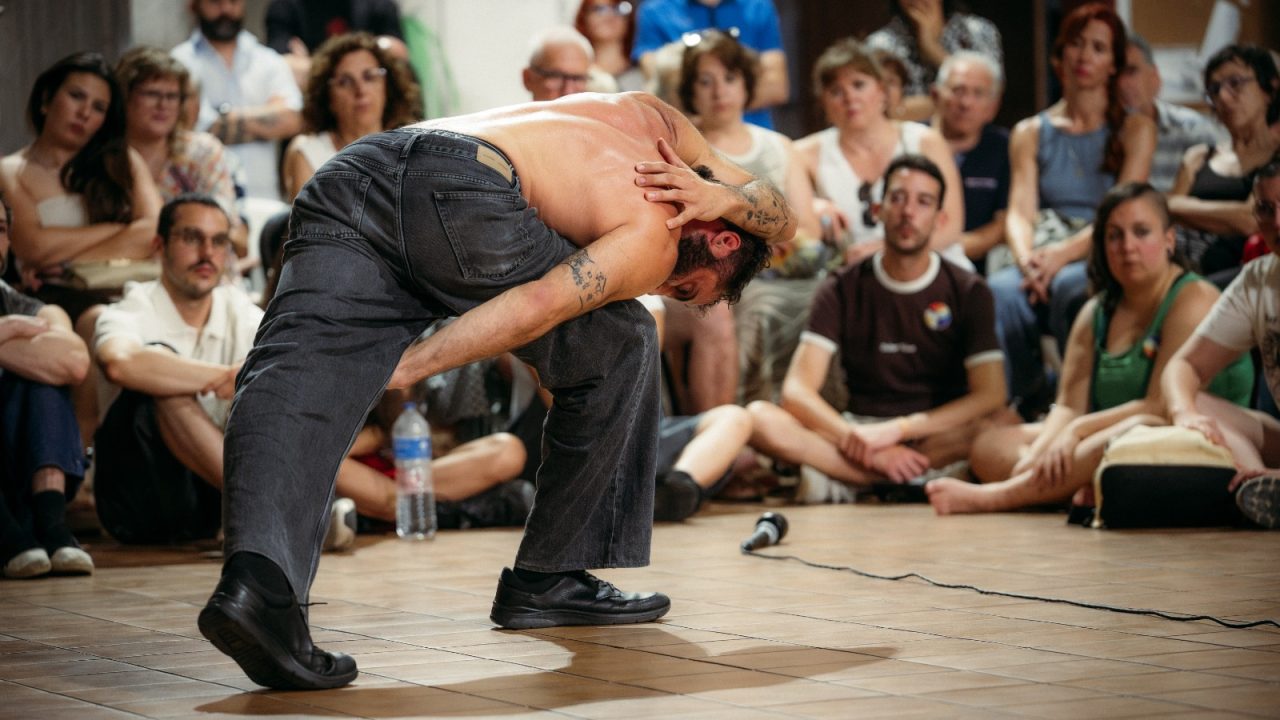
Featured picture © Beatriz-Ortigosa
Interview by Nicola Mitropoulou
What is a dance piece? Where does a work begin and where does it end? And a body? What is a body? Where does it start and where does it end?
Joaquín Collado opened his Startup Forum proposal with these questions. They became the starting point for our conversation about the sixth edition of Festival Paisaje, the rural dance festival he founded and curates in his hometown of Villamalea, in Albacete, Spain. Through his invitation of Charlie Khalil Prince’s the body symphonic, Collado expanded on how contemporary performance can cross geographical, cultural and political borders.
We spoke about returning to the landscape, defending community through dance, and creating spaces where new ways of seeing bodies, identities and traditions can materialise.
Looking Forward
Tell me about yourself, your journey into dance, and what inspired you to create Festival Paisaje.
I grew up in Villamalea, a small agricultural village in central Spain. I left when I was sixteen because there were limited opportunities to study the arts. My first training was in painting and sculpture. Later, while studying in Valencia, I discovered dance. I began with ballroom dance competitions before moving into theatre and eventually contemporary dance. I followed a non-academic training and later worked with dance companies in the Netherlands, Germany, Brussels, Paris and Barcelona, where I am now based.
Festival Paisaje de Danzas y Bailes. Paisaje means “landscape”, but not only in a geographical sense. For me, it also refers to a social and poetic landscape. During the festival, artists, residents, conversations, performances and workshops come together to create a temporary landscape of encounters.
The festival is a gesture of reconciliation and return: to come back to my landscape, to my hometown, and do something for my village and for that area. At the same time, I wanted to create a contemporary and experimental artistic context in Castilla-La Mancha, where opportunities remain very limited. It is also a call to local artists like me: come again to our landscape and let’s do something for ourselves.
Festival Paisaje places community participation at its centre. How does that shape the festival and its engagement with questions of identity and representation?
In Spanish, danza is often associated with academic or institutional forms of dance, while baile refers to dances learned through families, communities and the street. The festival is called Festival de Danzas y Bailes, both words in the plural, to say that dance is not only one thing. It is a plurality and multiplicity of identities, knowledge and ways of moving.
Most of our audience is non-professional and non-specialised. Professional artists have started coming in recent years, which is very nice, but the main audience is still people from the village. The festival is for the community first. Participation is one of our most important statements. Workshops can be even more important than performances because they allow people to experience movement directly.
One of the underlying purposes of the festival also comes from my own relationship with the village. Through the festival, I want to push the limits of how identity is constructed in rural areas: the stereotypes and categories around masculinity, femininity, gender and sexuality. I study the dramaturgy of the festival to create strategies that can expand the imagination and representations of the body.
This year’s programme includes Charlie Khalil Prince’s the body symphonic. What attracted you to the work?
I was interested in the way the piece proposes other representations of the Arab body and revisits traditional and folkloric dances through a contemporary perspective.
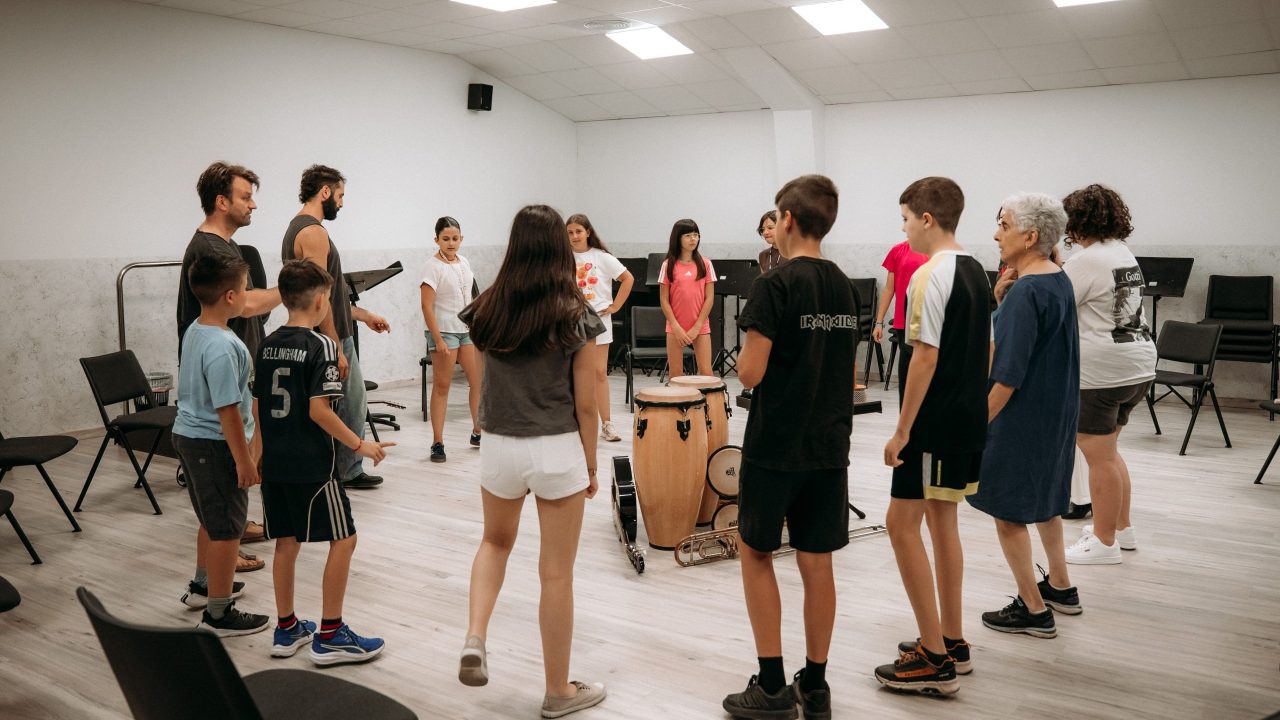
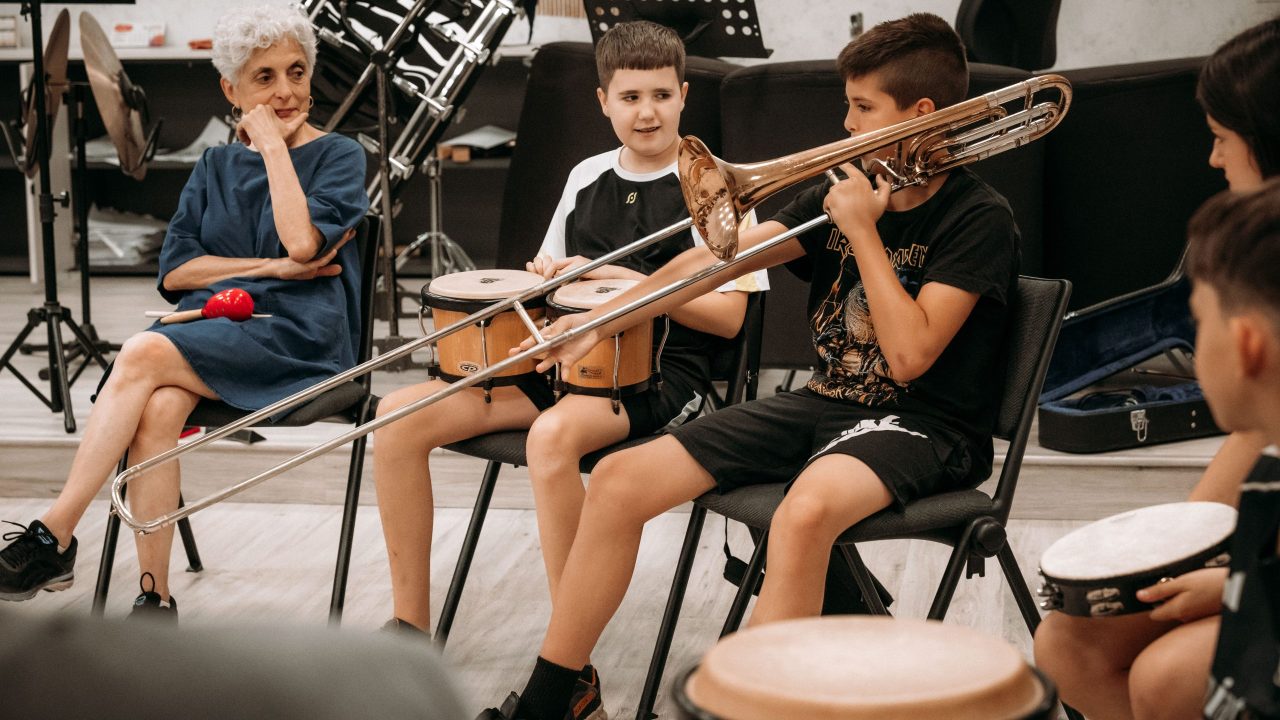
The curatorial programme this year is around the relationship between music and dance. There is a lot of musical culture in my village, and music is at the centre of Charlie’s work. Charlie and his collaborator Joss Turnbull will lead a two-day experimental sound and movement workshop with teenagers from the village music school and then perform the body symphonic at the local wine cooperative.
We do not have a theatre. Most activities happen in the street, in the square and, this year for the first time, in the church. I like seeing how these familiar spaces can be transformed. The village itself becomes the theatre.
(continue scrolling for part II)
Looking Back
A few weeks after Festival Paisaje came to a close, I spoke again with Joaquín. This time, we were joined by co-organiser Giuliana Grippo, who has worked alongside him over the past two editions. Together, they reflected on a year that marked a turning point for Festival Paisaje, exceeding expectations, while welcoming its first international collaboration through Aerowaves, and confirming that contemporary performance can find a meaningful place within rural communities.
Looking back, how did this year’s edition unfold?
J: The experience this year was very intense. We felt the festival had grown because many people came from other villages and cities, but also because people were looking for it. Suddenly they were writing on Instagram: “I want to come. How does it work?” We set up an impromptu camping area in the village sports centre, and people stayed throughout the weekend.
Local participation was incredible. Every activity was full. Every workshop had more participants than expected. It was challenging because the festival became bigger than we thought, but it was beautiful to see people so engaged.
G: I was surprised by the participation in Villamalea. People are proactive and supportive. Everywhere I went, people knew the festival, wanted to help, or simply wanted to talk about it.
How did the collaboration with Charlie and Joss unfold once they arrived?
J: They arrived before the festival started. We had dinner with my parents, and they stayed in a local house with other artists. We like people to become part of village life rather than simply arriving to perform.
The workshop was also a challenge because the participants were teenagers between the ages of twelve and fifteen. Most of the participants came from the local music school so they’re used to studying classical music. The first day there were six or seven people; the second day there were fifteen. That is how villages work. Everyone knows what happened the day before. Charlie and Joss invited them to explore sound differently. They began with body percussion and collective exercises before bringing in instruments.
G: Charlie spoke much more Spanish than we expected. I really liked that they encouraged the students to stop thinking about instruments in the conventional way. A trumpet didn’t always have to function as a trumpet. They explored other possibilities, other sounds, other relationships between movement and music. Many of the teenagers came together to watch their performance afterwards.
How was the body symphonic received by the local audience?
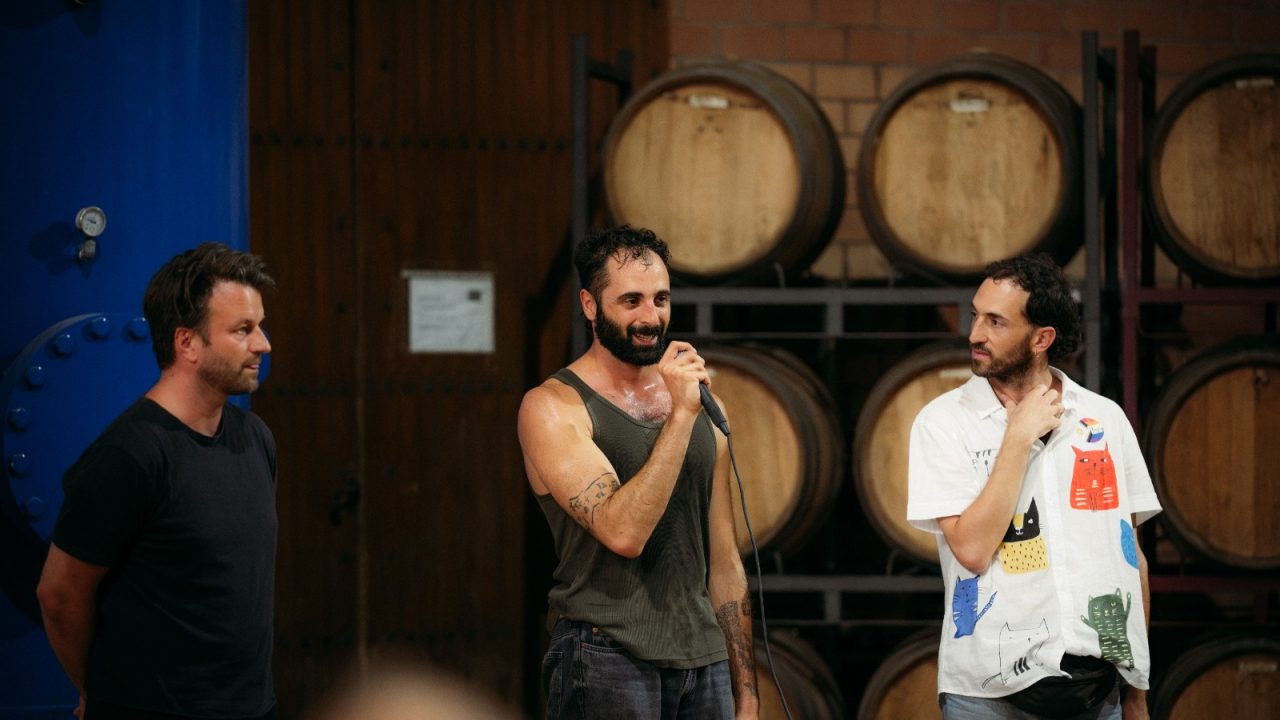
J: Their performance took place in the village wine cooperative. It’s one of the festival’s most beautiful spaces, but it was also a challenge because of the acoustics. We offered them other possibilities, but they chose to stay there. They wanted to work with the space rather than against it.
G: We spent a lot of time thinking about how to frame the performance so that people understood why this particular work was being presented in this particular place.
J: Before the performance I gave an introduction, not to explain the piece, but to connect it with the wider dramaturgy of the festival. Mediation is not about paternalising the audience. We simply have to offer some tools.
After the performance there was a discussion with the artists and the audience, Charlie spoke about Palestine and Lebanon, but also about Villamalea and working with the teenagers. It was very emotional.
Did this edition change how you imagine the festival’s future?
G: In some ways, bringing Charlie and Joss to Villamalea legitimised the festival. After six years, the festival already belongs to the village, but having Aerowaves’ support, having Charlie and Joss there, having Betsy Gregory visiting from London, gave another dimension to what we are building.
It was important not only practically, when speaking with institutions or thinking about future grants, but also symbolically. It showed that a rural festival can exist within an international conversation without losing its local identity.
J: What I felt was a radical trust from the audience. After six years, I felt they were saying, “Push my limits. I’m here.” We have built an identity around pushing the limits of perception, of the body and of the imagination. Now the audience is ready to come with us.
G: This edition confirmed that we can begin imagining differently. One conversation we’ve been having for some time is how to engage more directly with the different communities that already live in Villamalea. Although it’s a small village, it’s also very multicultural because of agricultural work. Around thirty different nationalities live there. We would like those communities to become more visible within the festival itself.
How would you describe the atmosphere to someone who has never been?
J: I think the performances are almost secondary. It is more about the community and the relationships between people during those days. If you come from outside, you can really make friends. You meet people in the workshops and at the parties. You meet my mother (laughs). Festival Paisaje is first for the village and the local community. When you present your work to my grandmother and her friends, children, workers and a non-specialised audience, you remember why you make art: to create relationships.
It is very transparent. You see how things are organised, you see us, and we spend time with people. Performances do not just appear onstage and disappear. It is one continuous thing.
G: I would describe it as celebratory and caring. There is time between events and no pressure to constantly consume performances. It is very hot, so we think about the flow of energy, leaving time to rest, eat and continue conversations.
How we host people is important. Artists do not just come, perform and leave. If you take care of them, they come back, and real connections happen naturally. We even went to the swimming pool with Charlie and Joss. Those moments are as important as the performances.
What challenges remain, and what has the festival changed for you personally?
J: One of the biggest challenges is the budget. Contemporary dance has very little infrastructure in Castilla-La Mancha. Sometimes I feel the institutions do not understand that this festival can be valuable for the region. Festival Paisaje can help redefine its cultural image.
G: Growth brings visibility, and visibility brings opposition. Somebody criticised a performance in the church on Facebook and called it blasphemous. But people from the village defended the festival themselves: “No. This is our festival.”
J: Before, my relationship with Villamalea was a contradiction. I love my village, my friends and my family, but I could not stay for more than a week. There was always pain. After six years, this edition brought a reconciliation. I am proud of the people there.
For the first time, I can imagine returning to create an artist residency centre for creative, artistic, educational and mediation projects. Last year it was speculation; now I am starting to believe it might be possible.