

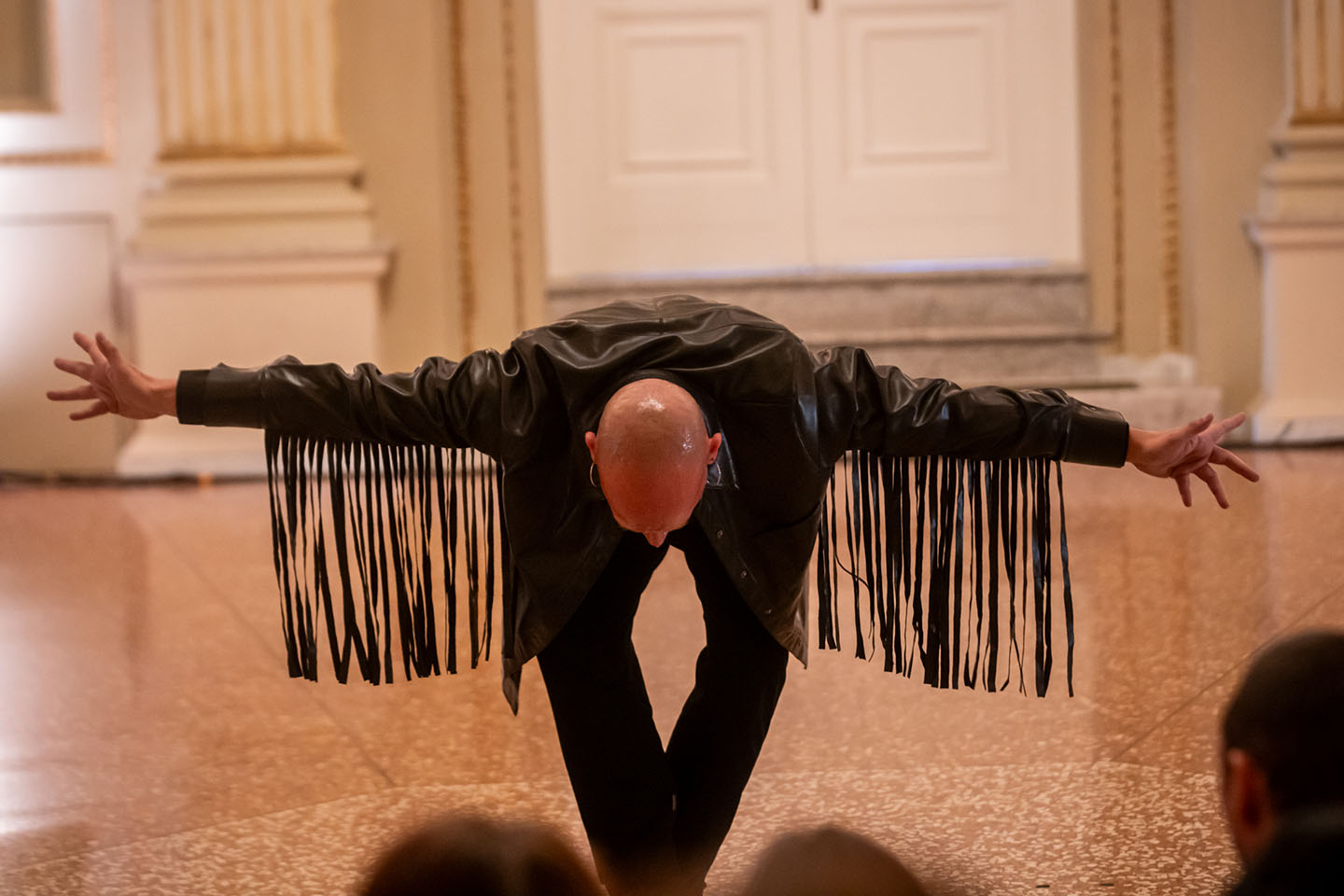
During the Supernova Festival in Rimini, I was fortunate to be able to see several performances.
7 May 2026
Fabritia D’Intino, Agnese Banti: Comeback
Sala Ressi, Teatro Galli
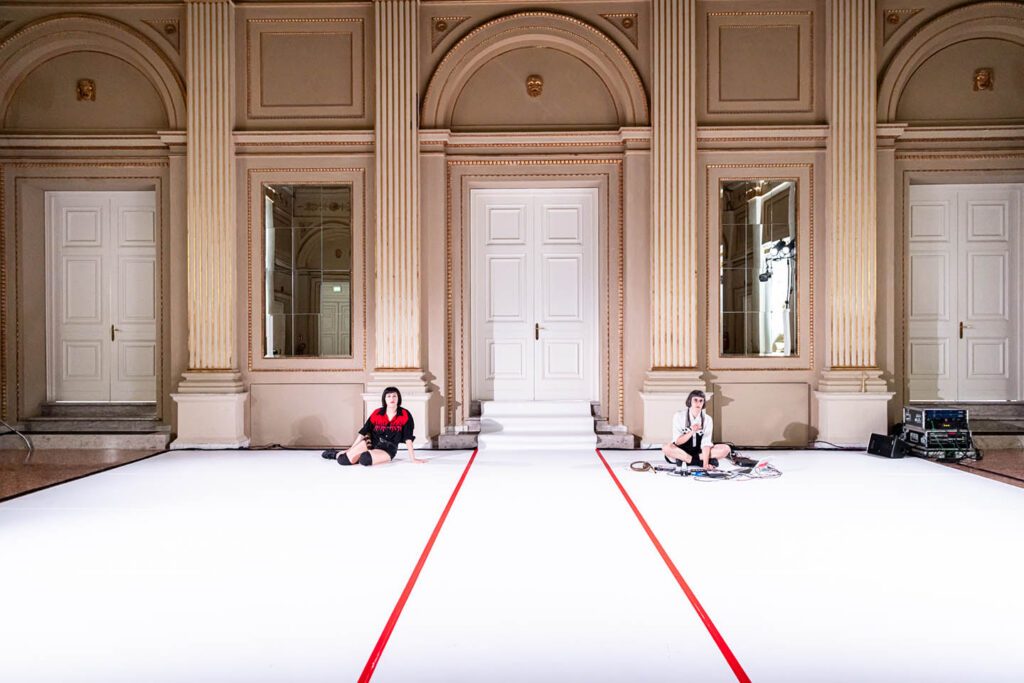
Under the luxurious decoration of the Sala Ressi, one of several available spaces inside the walls of the great Teatro Galli, choreographer and performer Fabritia D’Intino and sound artist and performer Agnese Banti presented Comeback. The duo presented a 35-minute performance where bodies and sounds respond to the principles of liquid dynamics. Their dialogue keeps flowing through the space as they create a sort of habitat for them to cooperate and perform symbiotically. D’Intino’s body, whose transparency to the soundscape emerges with clarity, seems to channel all the inputs in a flow that translates each sound into a live score. D’Intino and Banti engage the audience through continuously shifting and returning repetitions of movements, sounds and symbols. Inspired by an archive of devotional gestures and recordings of public discourses, they reflect on our transformative, multifaceted present with irony, directness and a good dose of aesthetic sophistication.
Abdullah Miniawy: Nigma Enigma
Rooftop, Rimini City Museum
With the audience sitting on the rooftop on the Museum of the City of Rimini, Egyptian writer, singer and composer Abdullah Miniawy starts singing and playing in front of a dream-like spring sunset. While the newly arrived swallows circle in the sky above our heads, the music spreads its vibes modulating voice, radio recordings, sounds and singing. Nigma Enigma represents a profound dialogue between different cultures, religions and literary references transformed through music.
8 May 2026
Michela Depetris: In the name of darkness, magic and vulnerability
Sala Ressi, Teatro Galli
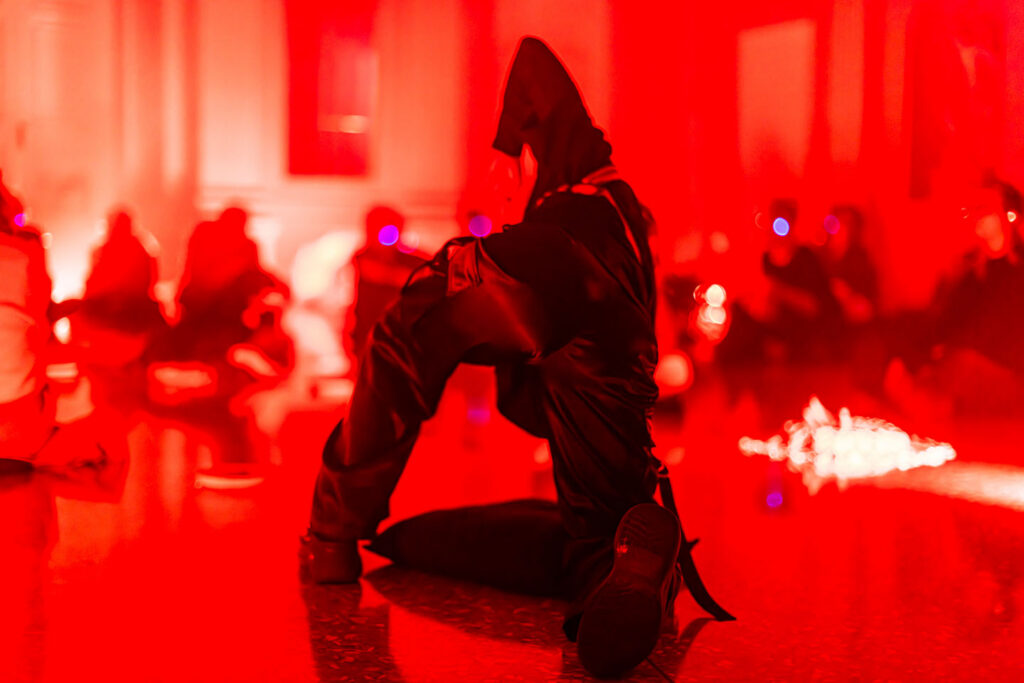
Choreographer and performer Michela Depetris, with performer Aurelio Di Virgilio, welcome the audience in Sala Ressi. In the name of darkness, magic and vulnerability is a participative performative experience where sounds, texts and installation-like objects coexist. Prior to entering the space, each spectator receives a headphone set. The space is kept dark with only some spots highlighted by coloured lights, revealing a series of objects such as plants, masses of nylon sheeting, and dishes with snacks. The performance, as a journey, brings the audience into a magical world where aleatory perspectives, bodily encounters and immersive imagination join together. Softly psychedelic, the instructions received via headphones guide the audience into a dancey, multimaterial, trans-sensorial realm that composes a gentle, enchanted and very enjoyable atmosphere.
Marina Otero: Ayoub
Teatro Galli
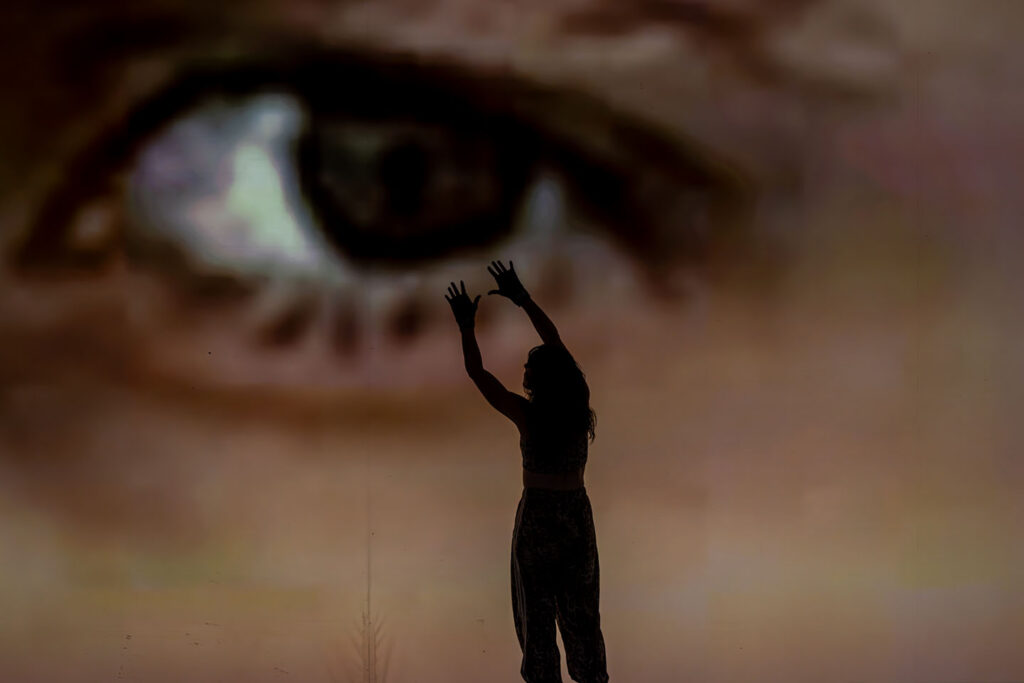
With Ayoub, performer and director Marina Otero invites us into her own world where art and life merge together. On the stage of Teatro Galli, she accompanies the audience into her lifelong artistic project, with which she declares to be engaged till her very end. By these premises, she presents a personal search for a relationship based on a sort of mutual agreement, a contract realistically masked as love. She looks for companionship in exchange for a home in Spain, a European document, and an implicitly worn out idea of cultural freedom. Will she, through her love, save someone from a situation of vulnerability? She leads the audience into the smallest folds of her project.
While unfolding itself, her exchange based on “love” reveals how she cannot avoid being permeated by colonialism. Ayoub is the youthful, ingenuous man she involves in her life project. We see them pictured together on a big screen behind her while she tells their story, of their common engagement supporting the victims of the genocide in Gaza, and the proper intimacy they share. She tries to escape from the occidental mark, but eventually lectures the audience on the impossibility of living in a world dominated by daily violence and various forms of submission and yet be in a true relationship.
In the last part of the piece, she is reached onstage by Ayoub (performer Ibrahim Ibnou Goush) who – in a scene of hyper-reality – delivers to the audience the end of the love story. He unmasks all the controversial principles, and returns to Otero no keys to save her. His enraged discourse denies her not even a partial salvation, but her (our?) full, catastrophic fail.
9 May
Vincent Giampino: Schau/stellen
Sala Ressi, Teatro Galli
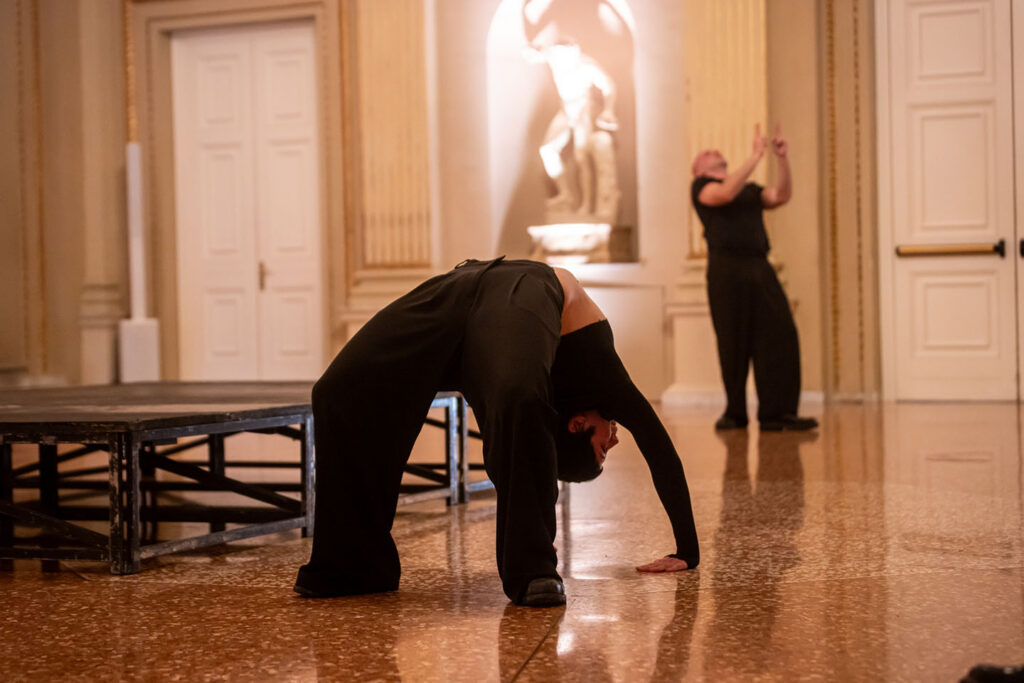
Surrounded by the golden decorations of the Sala Ressi inside Teatro Galli, the audience sits on the floor in front of the empty space. With a steady rhythmic percussion accompanying the scene, performer Vincent Giampino walks to the centre and bows multiple times, as if to receive applause. Schau, the first part of the piece, is part of his research ‘Umlaut’, and deals with the acts of bowing, stooping and curtseying – gestures that mark the end of something and the following phase of parting. Resonating also with the concepts of forgiveness, supplication for mercy and surrendering, Giampino shifts to the second part, Stellen, where he explore the possibility to dominate and be dominated. In this second act, he is joined by performer Greta Francolini. Both keep moving their torsos up and down, front and back, adding perspectives to single gestures until a moment where dark fluids start to pour from their bodies. Political and aesthetic, this research is rooted in a matter of dark symbolism which engages the audience as a pure, and yet potentially empathic witness.
Cedric Mizero: Umunyana
Teatro Galli
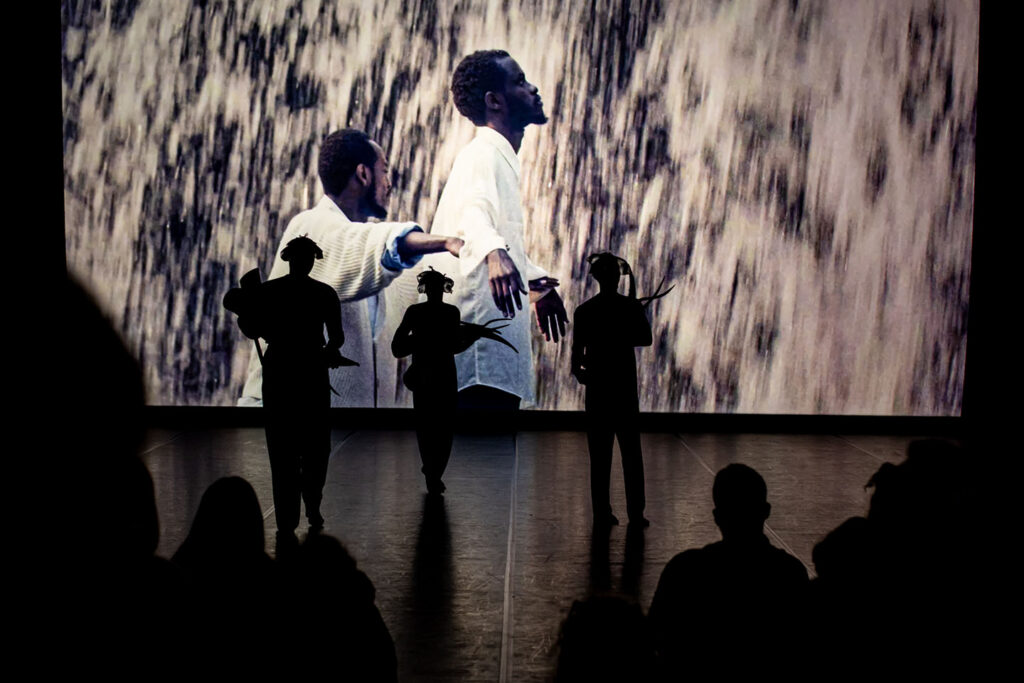
Without equal, this enriching performative installation celebrates memory, traditions and the fantastic narratives connecting animals and humans through past and present. Cedric Mizero, born in Rwanda in the early 90s, recalls his Rwandan background and, through a fragmented multidisciplinary vision, shares his exploration of the history and culture of breeding in his home country. The chants, songs and dances onstage resonate with the images displayed in the movie shown behind. Cows are sacred animals in Rwanda, and here they are embodied, mourned and sung. With arms lifted to imitate cow horns, the performers enact the sacred alliance between animality and humanity. The audience, engaged by the beauty of the chanting voices and the images projected on the screen, is invited to experience the ritualistic energy of a rural culture that might be fading away because of the consequences of globalisation and the loss of cultural connections and traditions.
Despite all the current risks affecting aspects of his original culture, Mizero manages to firmly keep the focus on the essence of his research. Through Umunyana he impresses with poignant visions that cultural changes and disappearing realms can unfold.
10 May
Cristina Kristal Rizzo: GROOVE (is in the heart)
Teatro Galli
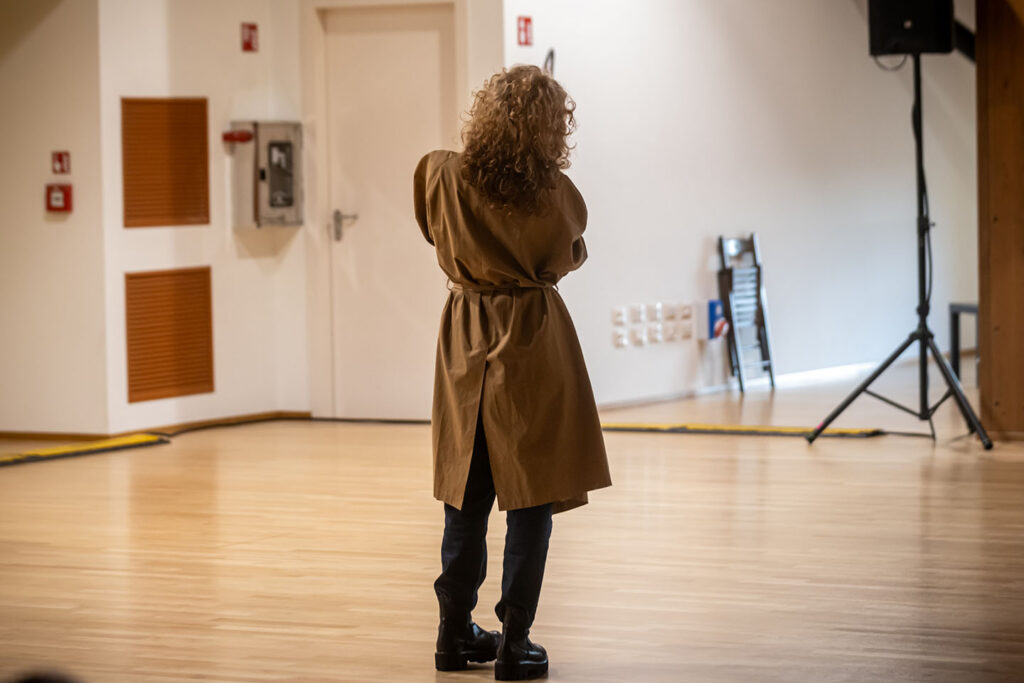
The performance, shown indoors because of adverse weather, is a solo by performer and choreographer Cristina Kristal Rizzo. Gathered in a wide rehearsal studio inside Teatro Galli, the audience sits, informally, on the floor. As the 50-minute dance takes place all over the columned room, the performance can be seen through a multitude of different perspectives. The dance seems to explore a series of continuous possibilities, accumulations of gestures, a proliferation of small “intimate events” that happens to become shared with the public as soon as they appear on the surface of the performer’s corporeality. Music and sound support the generation of movements while underlining the openness of the project, where the gaze might be given back its freedom through the pleasure of dancing without a prescribed scheme to follow.