

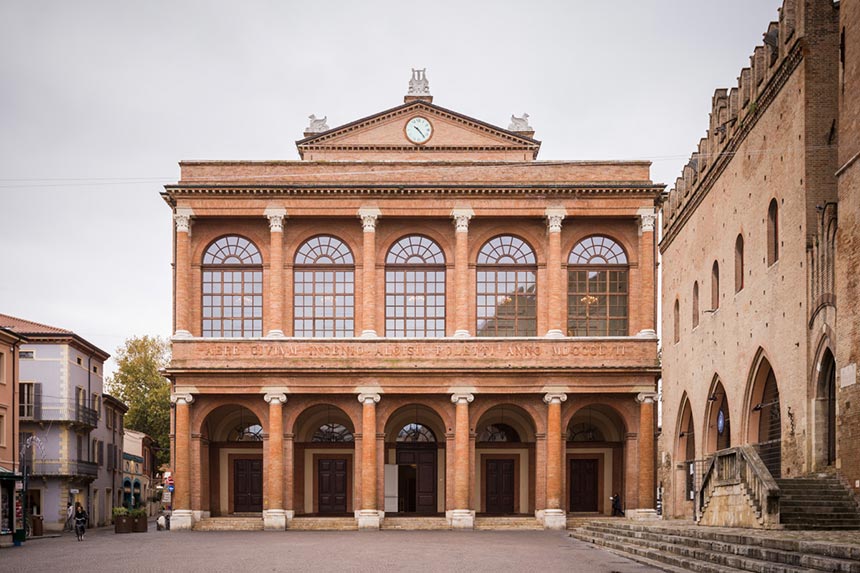
Rimini is one of the liveliest cities on the Adriatic coast. Until the 2010s, it was primarily known for its dual identity as both a popular family holiday destination and a hub of disco nightlife for younger people. Recently, the city has undergone a rediscovery of its beauty and history, presenting itself as a worthwhile artistic and cultural destination. The restoration of its majestic theatre in 2018, named after Amintore Galli and destroyed by World War II bombs, marked the profound transformation of the city. However Rimini, which is also Federico Fellini’s birthplace, has a strong connection to contemporary theatre culture for two main reasons: the proximity with the large Santarcangelo Festival, and the presence of the theatre company Motus, founded in 1991 by Enrico Casagrande and Daniela Nicolò.
The fourth edition of Supernova Festival (7–10 May 2026), directed by Casagrande and Nicolò with the support of dramaturg Paola Granato, is a curatorial project emerging in Rimini from their will to root themselves in this renovating city, and to open up intergenerational dialogues among multidisciplinary artists. In a region rich with many different theatrical experiences and possibilities (companies, festivals, and so on), Supernova seeks to create a sense of community by opening up to audiences, artists and local participants alike. Throughout the festival, the community of spectators was invited to follow a thematic journey of daily performances, encounters, talks, screenings and shared experiences, designed to encourage reflection, participation and new ways of seeing contemporary artistic practices. Supernova dialogues with Rimini as a whole, but the festival mainly inhabits the spaces of Teatro Amintore Galli through a vibrant and multidisciplinary programme. Its mission is to highlight emerging artistic realities, foster dialogue with international artists, and strengthen the city’s European cultural outlook.
The guiding image for the 2026 edition image is the mangrove, symbol of resilience and coexistence. These plants grow in lands where water meets soil, and they create complex ecosystems of mutual support. In accord with this “mangrovian” principle, the festival highlights the importance of exchanges, collective growth, and dialogues generating new collective visions.